Service Area Pages for Plumbers That Aren't Copy-Paste
A plumber's town page should say what only a local shop knows: the houses, the water, the jobs done there, the permits. Some towns shouldn't get one.
By the Plumber SEO Company team / / 5 min read
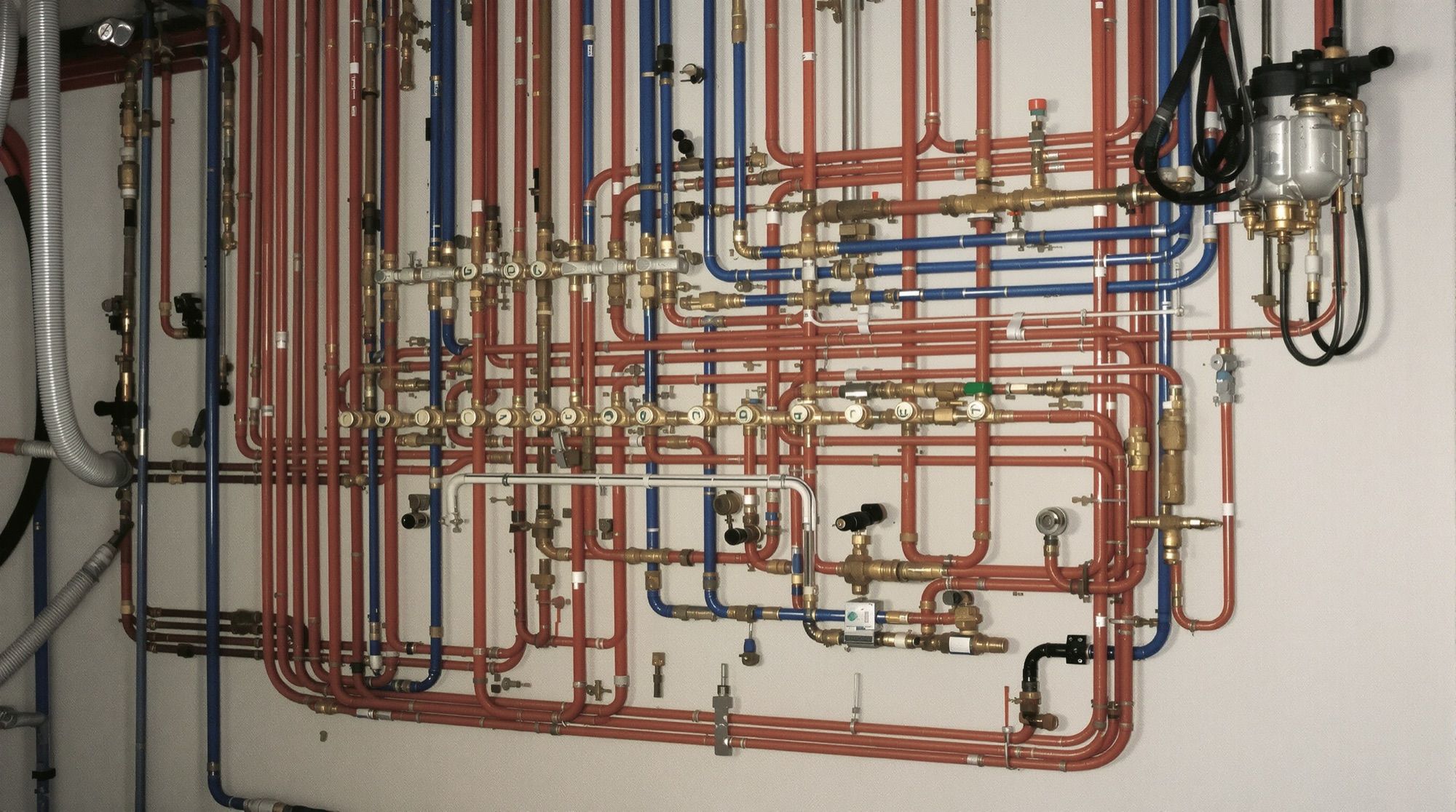
A service area page earns its spot when it says something about the town that only a plumber who works there would know: how old the houses are, what the water does to fixtures, what jobs you've done there lately, how permits and inspections go. A page that swaps the town name into the same 600 words helps nobody. Build fewer pages, make each one specific, and skip the towns where you don't really send trucks.
Why the swapped-name page doesn't pull its weight
Most plumbing sites have them. "Water Heater Repair in Springfield," then the same page again for the next town over, then the next, with only the name changed. They were cheap to make, so a lot of shops made forty of them.
The problem is that a homeowner who lands on one can tell in a few seconds. The page says nothing about their town that couldn't apply to any town in the country. And Google's spam policies name doorway pages, meaning batches of near-identical pages built to catch searches, as something it acts against. A thin page for every town in a 40-mile radius can drag down how Google sees the whole site.
A good town page reads like your most experienced tech describing the area to a new hire.
What a useful town page covers
The houses
Housing stock drives the work. A town full of 1950s ranches has different problems than a subdivision built fifteen years ago, and homeowners recognize their own house when you describe it.
Write the kind of thing your techs already say in the truck: "A lot of the older homes on the east side still have galvanized supply lines, so we do a fair number of repipes there," or "Most of the newer builds out by the highway have PEX and tankless units in the garage." Keep it to what you've actually seen.
The water
Water varies from town to town and between city water and private wells. If your techs pull scale-packed elements out of water heaters in one town every week, or replace crusted aerators and cartridges more often there, that's useful to a homeowner deciding whether to repair or replace.
Describe what you see on the job. Leave health claims out entirely, and send people to their water utility or a testing lab for questions about what's in the water.
Jobs you've done there
This is the part that copy-paste pages can't fake. Two or three short write-ups of real jobs in that town, with a photo each:
- What the call was ("no hot water on a Sunday morning, 12-year-old gas tank, leaking at the base").
- What you found and what you did.
- Roughly how long it took.
Name the neighborhood or the general area, never a street address, and get the customer's permission before using photos from inside their home. A short job note written the day of the call takes five minutes and does more for the page than another paragraph about "quality service."
Permits and inspections
If a town requires permits for water heater swaps, sewer line work or repipes, homeowners want to know who handles it. Say how you handle the paperwork and the inspection there. Don't state the town's rule as fact unless you've confirmed it with the building department, and check it again when you update the page. Rules change, and your page shouldn't be the place a homeowner reads an old one.
The practical stuff
- Which part of town your trucks come from, and whether after-hours service reaches there.
- Any trip fee past a certain line.
- The neighborhoods and nearby landmarks people use to describe where they live.
- Links to your main service pages for the jobs most common in that town.
A simple outline
| Section | Length | What it does |
|---|---|---|
| Opening | 2-3 sentences | Says you work there and what you do most |
| Houses and water | 1-2 short paragraphs | Shows you know the area |
| Recent jobs | 2-3 short write-ups | Proves it with real work |
| Permits and access | 1 paragraph | Answers the "who handles it" question |
| Hours and coverage | A few lines | Sets expectations for nights and weekends |
That usually lands somewhere between 500 and 900 words. Long enough to be useful, short enough that someone reads it on a phone.
When not to build a town page
Not every town on your map needs its own page. Skip it when:
- You don't really go there. If a call from that town gets a "we're booked out that way," don't build a page that promises otherwise.
- You have nothing different to say. Two small towns that share a water source, a housing era and a building department can share a page about the area.
- You'd send a sub. The page should describe the shop that actually shows up.
- It's a stretch town for after-hours work. If nights and weekends don't reach there, either say so clearly on the page or leave it off.
A short list of strong pages beats a long list of weak ones. Google already knows your service area from your Google Business Profile; the pages are there to convince people, not to list every place you've ever driven.
Where to start
Pull last year's tickets and sort them by town or ZIP code. The five to eight towns with the most booked jobs, especially the most water heater replacements, sewer jobs and repipes, are where your first pages go. You already have the job notes and photos to fill them.
After that, add one or two pages a month, each one written from real work. A town gets a page when you have something to say about it.
This approach works outside plumbing too. One of our case studies is a window tinting company in California that ran a Golden package plus content writing from February to July 2025. Its weekly leads went from 5 to over 280 (40+ a day), largely through city-specific pages, and it reached page one across dozens of California cities. Different trade, same principle: each city page had a reason to exist.
Town pages pull more weight when the rest of your local setup backs them up: the profile, the reviews and the citations all pointing at the same service area. Our local SEO service for plumbing companies is built around that.
Pick the busiest town on last year's ticket list and write that one page this week. It will tell you more about what the next ones need than any template.