Water Heater Keywords: Ranking for Replacements, Not Just Pilot Light Fixes
Water heater replacement SEO for plumbers: the search ladder from no hot water to tankless installs, and how to build a page that books replacement jobs.
By the Plumber SEO Company team / / 6 min read
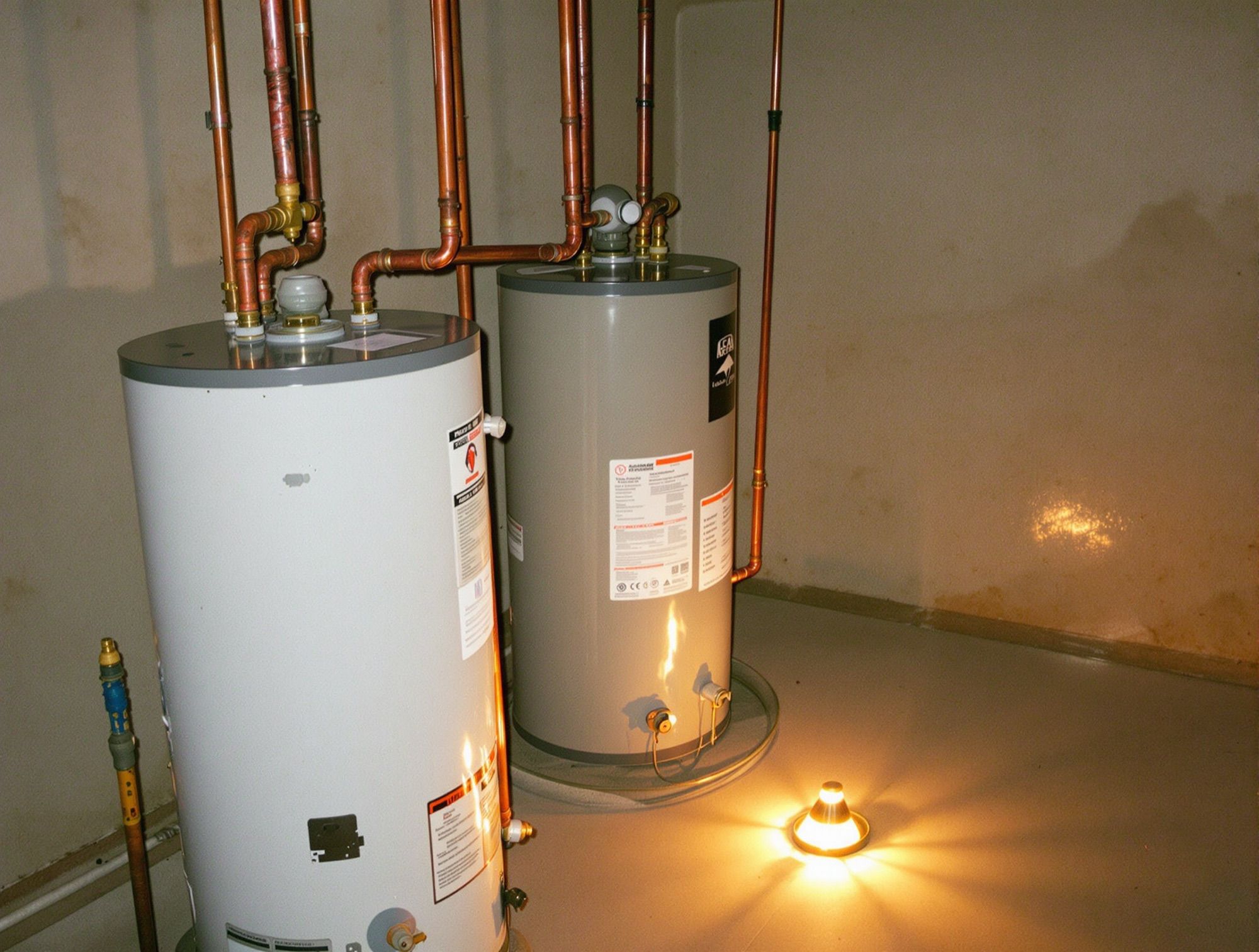
Water heater searches climb a ladder, from "no hot water" at the bottom to "tankless water heater installation" at the top, and the replacement jobs sit near the top. Most plumbing sites have a single water heater page trying to answer every rung at once, so it picks up repair and how-to searches and misses the replacements. Water heater replacement SEO means separate pages for separate intents, with the replacement page written the way a homeowner actually decides to buy a new unit.
The search intent ladder
Every water heater call starts with a symptom and ends with a decision. The searches change as the homeowner moves up. Roughly:
| Rung | What they type | What they want | Ticket |
|---|---|---|---|
| 1. Symptom | "no hot water," "water heater not working," "water heater making noise" | To know what's wrong | Unknown yet |
| 2. DIY | "pilot light won't stay lit," "reset water heater," "water heater breaker keeps tripping" | To fix it themselves | Often none |
| 3. Repair | "water heater repair near me," "water heater leaking from bottom" | Someone to come fix it | Small to medium |
| 4. Replace | "water heater replacement," "replace 50 gallon water heater," "new water heater installed" | A new unit, installed | Large |
| 5. Upgrade | "tankless water heater installation," "heat pump water heater installer" | A specific upgrade | Largest |
The ticket column is relative on purpose. Your own invoices show the real gap between a thermocouple and a full swap.
Rungs 1 and 2 bring traffic. Some of it becomes calls, especially leak searches, since a leaking tank often turns into a replacement conversation. But a page that ranks for "how to relight a pilot light" mostly attracts people who plan to relight it themselves.
Rungs 4 and 5 bring fewer searches and much more money per call. That's where page structure matters most.
One page for each rung you want to win
You don't need a page for every phrase. You need a page for every intent you want to book.
A repair page
Covers symptoms and repairs: no hot water, pilot and igniter trouble, thermocouples, elements, thermostats, leaks at valves and fittings. It ends with a clear handoff: when the tank itself is leaking or the unit is near the end of its life, replacement usually makes more sense, and here's how you handle it. Then a link to the replacement page.
A replacement page
The money page. Its own URL, its own title, written for someone who has decided, or nearly decided, to replace. The structure is below.
A tankless page, if you sell tankless
Tankless buyers are usually planning rather than standing in a puddle. They compare options and take their time. Give them a page of their own instead of a paragraph tacked onto the replacement page. If you install heat pump water heaters, the same goes for those.
Supporting posts
Blog posts can catch rungs 1 and 2 and move readers up the ladder: "Water heater leaking from the bottom: repair or replace," or "Signs your water heater is near the end." Each one links to the repair or replacement page with plain anchor text.
How to structure a replacement page
Lay it out in the order a homeowner works through the decision.
1. Headline and opening
"Water Heater Replacement in [Town]," then an opening that says what you install, how soon you can usually do it, and how to book. If you can often install same day when the unit is on the truck or in stock, say so, and say what that depends on.
2. Signs it's time
A short list in your techs' words: a leaking tank, rusty hot water, a unit near the end of its life, repeat repairs, not enough hot water for the household anymore. This section catches people still torn between repair and replacement.
3. The options you install
Tank gas, tank electric, tankless, heat pump, and the brands you carry. A short table helps:
| Option | Often a fit for | What we tell homeowners |
|---|---|---|
| Tank, gas | Homes with existing gas service | We match the hookup and venting to your home and local code |
| Tank, electric | Homes without gas | Usually a straight swap in the same spot |
| Tankless | Households that run out of hot water or want the floor space back | Install may involve venting or gas line changes, quoted up front |
| Heat pump | Owners watching energy costs | Needs room around the unit; we check the location first |
Keep the claims general and true for your market. Don't quote efficiency figures you can't back up.
4. What's included
Replacement pages win or lose here. Spell it out:
- Removal and haul-away of the old unit
- New connections, valves and fittings as needed
- Permits pulled where your city requires them
- Any parts your local code calls for, if it calls for any
- Testing, cleanup and a walkthrough with the homeowner
- Warranty terms: the manufacturer's warranty and your labor warranty, in plain words
5. How pricing works
You don't have to post a number, and whether to publish prices is a separate decision. Do explain what moves the price: tank size, fuel type, venting changes, access (attic, closet, basement, crawlspace) and permit fees. Homeowners shopping a replacement want to know they'll get a quote before work starts. If you offer financing, say so here.
6. Real photos and a few honest reviews
Photos of your own installs, captioned by type: "50 gallon gas tank, basement install." If your Google reviews mention water heater replacements, quote short pieces with the customer's first name, word for word.
7. Questions homeowners ask
A short FAQ: how long the install takes, whether they'll be without hot water overnight, whether you take the old one, what happens if the venting or floor drain needs work. Answer in your shop's real terms.
8. Booking
Call button, a short form, your service towns and your hours. Repeat the call button after the options table and again after the FAQ, because people make up their minds at different points on the page.
Getting the replacement page to rank
A good page still needs signals pointing at it:
- Internal links. Link to it from the repair page, the homepage, related posts and your service area pages, using anchor text like "water heater replacement."
- Google Business Profile. Add water heater replacement and tankless installation to your services, and upload install photos.
- Reviews that mention the job. Ask for a review right after an install, while the hot water is still a fresh relief. Customers tend to mention the job on their own. Don't script what they write.
- Links from other sites. Local links and relevant guest posts that point to the replacement page itself, not only the homepage.
This is the kind of page-by-page work we do as an SEO agency for plumbing companies: matching pages to the jobs you want, then building the links and profile signals behind them. If your current site makes adding a new service page a chore, that's worth fixing first; our plumbing website design page covers what a site needs to support this.
Pull up your water heater page today and ask which rung it was written for. If you'd like a second opinion on what to change, request a free SEO checkup and mention water heaters in the notes.